Guides › Guide
Change request template
Every project has a stakeholder who says just one small thing, usually at 4.55pm on a Friday. A change request is how you turn that small thing into a decision somebody signs, instead of a surprise you absorb.
What a change request is for
A change request is a short written proposal to alter the agreed scope, schedule, budget or quality of a project. It exists so that the person asking sees the price of the change before it happens, and so that the person approving it signs for the consequences.
Keep it to one page. If a change needs ten pages to explain, it is probably a new project in a trench coat.
The form: fields to copy
Paste this structure into your own document and adjust the wording to your governance.
- Reference number, title and date raised.
- Requested by (a named person) and the sponsor it needs to go to.
- Description of the change in two or three plain sentences.
- Reason: the problem it solves or the opportunity it creates.
- Priority: must have, should have or nice to have, with a needed-by date.
- Status: raised, assessed, approved, rejected, deferred or implemented.
The impact assessment
This is the part that turns an opinion into a decision. Fill it in before anyone is asked to approve.
Be specific. Extra work of some days is not an impact; three working days of development plus one of testing is.
- Scope: which deliverables are added, changed or removed.
- Schedule: the tasks affected, the new end date and whether the critical path moves.
- Cost: extra effort, purchases and contingency used, shown as a before and after total.
- Risk: new risks created or existing ones made worse.
- Dependencies: other teams, suppliers or projects that must also change.
- Benefits: what the business gets, and whether the benefits case still holds.
Options and recommendation
Offer at least two options besides doing nothing, for example approve in full, approve a reduced version, defer to a later phase. Then say which one you recommend and why, in a sentence a busy sponsor can read in the lift.
- Option A: do nothing, and what that costs.
- Option B: approve as requested, with the impact figures above.
- Option C: a cheaper or later alternative.
- Your recommendation and the reason in one line.
Decision and follow-through
A change is not approved until the right person has said so in writing. Record who decided, when, and what changes in the plan as a result. Then actually update the baseline, otherwise the next report compares you against a plan nobody follows.
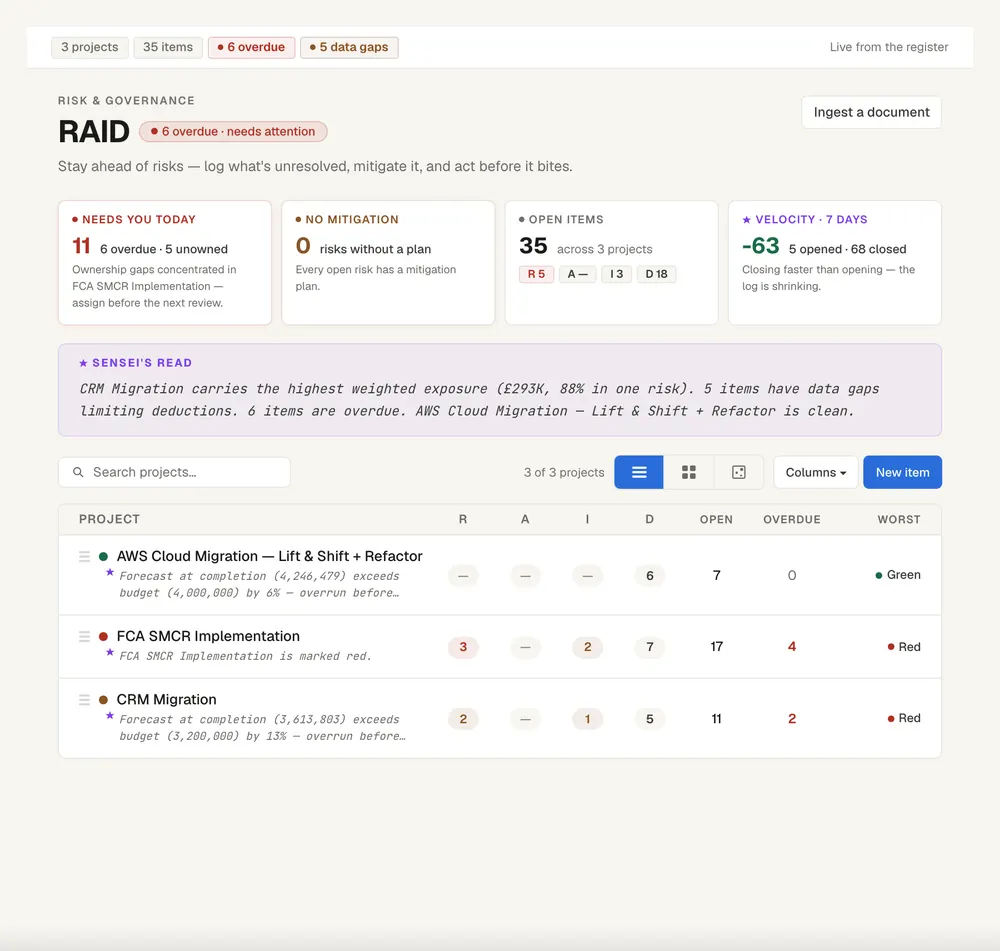
In Senshin the decision sits in the RAID log next to the plan task and cost line it affects, so the trail is there when someone asks why the date moved.
- Approver name, decision, date and conditions attached.
- Updated end date, budget and scope, with the old values kept for comparison.
- Owner of the plan update and the date it will be done.
- A line in the next SteerCo report so no one learns about it by rumour.
Keep this live, not in a spreadsheet
Senshin keeps your plan, RAID, budget and reports in one place, so this stays current without a weekly copy-and-paste. A 14-day trial, with sample projects.
Start your 14-day trialWhere this lives in Senshin
Or £499.90 a year. Every plan starts with a 14-day trial; after it, your work stays, read-only, until you subscribe. Cancel any time. Prices exclude tax. Enterprise is priced per contract: talk to us.
Frequently asked questions
What is a change request in project management?
A change request is a formal proposal to alter an approved project baseline, covering scope, time, cost or quality. It records the reason, the impact and who approved or rejected it.
Who approves a change request?
That depends on your governance. Small changes inside agreed tolerances often go to the project manager or sponsor, while larger ones go to the steering committee.
What is the difference between a change request and scope creep?
A change request is a visible, assessed and approved change. Scope creep is the same extra work arriving without that assessment or approval.
How do I handle urgent change requests?
Keep the same fields but shorten the cycle: give a quick impact estimate, get a named approver to decide the same day and record it. Urgent should never mean unrecorded.
More guides
Last updated: